When Something in the Mirror Feels Different
There comes a time when you look in the mirror and something looks a little different. Perhaps the skin by your jawline no longer feels as taut as it once did. Perhaps the wrinkles around your eyes appear darker than you recall. Or perhaps you have simply felt as if your exterior no longer reflects the energy you hold inside. If any of that sounds familiar, you are not alone — and you are most certainly not vain for wanting to change it.
HIFU Treatment — short for High-Intensity Focused Ultrasound — is a non-invasive cosmetic treatment that applies focused ultrasound energy onto the skin to naturally tone, lift and tighten the skin. No needles, no scalpels and no general anaesthesia. You walk in, get your treatment done and walk out the same day, ready to go back to everyday life. It really is that straightforward.
What is truly exciting about HIFU Treatment is that it works with your body, not against it. This procedure, rather than injecting foreign products or cutting skin away, stimulates your own body to make new collagen. That makes the results gradual, natural in appearance and long-lasting. No one will look at you and think you have had work done. They will just think you look good — and that is truly the goal.
This page is designed to provide you with the need-to-know basics about HIFU Treatment. An honest, in-depth look at what it is and why it works. What areas it can target. What results to expect and whether this procedure may be right for you. No pressure. No gimmicks. Just the right information to help you make decisions that sit well with you.
Understanding How HIFU Treatment Works
To truly get a grasp on HIFU Treatment, it helps to consider what occurs to our skin as we age. Below the surface of your skin, there is a protein known as collagen. Collagen is basically the scaffolding that keeps everything where it needs to be — it has a role in keeping skin full, firm and elastic. When you are younger, your body makes plenty of collagen. But at some point around your mid-twenties, that production begins to slow down. By the time you are in your thirties and forties, there is a noticeable decline. The skin begins to lose its firmness. Gravity does what gravity does. And slowly, the face you see in the mirror begins to reflect that change.
HIFU Treatment gets down to the cause of this problem. The application uses focused ultrasound energy — like sunlight through a magnifying glass, you could say — to provide precise heat to the deeper layers of your skin. Especially the dermis and the SMAS layer. The SMAS, or superficial muscular aponeurotic system, is the identical deep tissue layer that surgeons work with during a traditional facelift. But with HIFU, there is no surgery needed.
At this point, the focused ultrasound energy penetrates deep layers producing controlled thermal points. These small pockets of heat immediately cause the existing collagen fibres to contract and firm up. But that is only the beginning. The heat also activates your body's natural healing response, which creates new collagen. Over the weeks and months that follow, this new collagen continues to develop deep within the skin, tightening and lifting it over time.
The great part about this process is that your skin surface is left totally unbroken. The energy of the ultrasound does not harm the outer layer. It simply penetrates. Everything unfolds far down below, precisely where it counts. That is why there is no visible wound, and therefore no scarring or actual recovery time required.
It is also reasonable to say that HIFU Treatment does not try to challenge our body's biology. It works alongside it. It provides your skin the incentive to begin doing what it once did without trying — renewing itself, keeping firm. And since the changes occur gradually via your body's own collagen production, they look and feel entirely natural.
Focused ultrasound technology has been in use in the medical world for decades — well before it entered cosmetic treatments. It has a long-studied safety history. When performed by a trained practitioner using quality equipment, it is one of the most reliable non-invasive skin tightening systems available today.
Facial Areas and What to Expect
Because the face is where most people first start noticing signs of ageing, it is also generally the area where HIFU Treatment achieves some of its best results. What sets this treatment apart, especially when it comes to facial renewal, is that the ultrasound energy can be aimed at very specific places. This lets the practitioner customise your session according to your personal priorities.
Here is a closer look at the major areas on the face where HIFU Treatment is often used and what types of results are commonly seen.
Forehead and Frown Lines
Those lines running horizontally across your forehead, or the vertical creases between your brows, can make you appear tired, stressed or older than you are. HIFU Treatment tightens the underlying tissue to smooth these lines. The skin over the forehead feels tighter and brow lines are visibly reduced. It does not freeze your expressions the way some injectable treatments can — you still look like yourself.
Eyebrows
As the skin loses elasticity, the brows can droop, which makes the eyes look heavier and more hooded. Just a few millimetres of lift via HIFU Treatment can open up the entire eye area. People often say they look more awake and refreshed once the brow area has been treated. It is one of those subtle changes that makes a deceptively large impact.
Crow's Feet
Those fine lines that start to fan out from the corners of your eyes are amongst the first signs of ageing. They form because the skin surrounding the eyes is very thin and sensitive. HIFU Treatment subtly tightens this zone, reducing the appearance of crow's feet and promoting a more youthful look without altering your facial expressions.
Cheeks
Drooping cheeks can give the face a hollow or sunken quality, and they tend to be responsible for those deeper folds that stretch between the base of the nose and down toward the corners of the mouth. HIFU Treatment lifts and firms the cheek area for a fuller, younger contour. Many describe the result as having their cheeks lightly lifted back to where they once rested.
Jawline and Jowls
One of the characteristics of a youthful face is a well-defined jawline, and it is one of the first things to soften with age. HIFU Treatment along the jawline helps to tighten the skin and is designed to reduce jowls. The result is a more sculpted jawline that frames the face beautifully. This is a hugely popular treatment area, and for good reason — most people see quite dramatic results.
Double Chin
A double chin is not just for people who carry extra weight. It is sometimes simply a matter of skin laxity and genetics. HIFU Treatment can target the loose skin beneath the chin, lifting and tightening it for a cleaner, more defined profile. Results like this give many people a real boost in confidence.
Neck
The neck is sometimes referred to as the giveaway area, and it is not hard to understand why. The skin around the neck is thinner and ages more quickly than other parts of the face. HIFU Treatment targets that loose, crepey skin that many refer to as turkey neck — skin that gathers below the chin and along the throat. After treatment, the neck looks tighter, smoother and in better proportion with the remainder of the face.
Décolletage
The décolletage, especially in women, tends to age more quickly than many expect, with fine lines and wrinkles setting in alongside sun damage. HIFU Treatment for the décolletage helps firm and smooth this area, making it healthier and more youthful in appearance. It is a frequently neglected part of the body that can have a genuine impact on how confident someone feels in certain clothing.
Beyond the Face — Body Tightening and Toning
Although HIFU Treatment is primarily associated with facial rejuvenation, the same technology works remarkably well on other areas of the body too. The principle is the same — ultrasound energy directed at deeper layers of skin stimulates collagen production and tightens tissue — but the application areas extend well beyond the face.
For the upper arms, HIFU Treatment targets what is commonly referred to as bingo wings — that loose, saggy skin on the underside of the arms that people can feel most self-conscious about. It firms up this area without surgery, and most people begin to see improvement in a few weeks.
The stomach and abdomen are among the most common treatment areas, particularly for those who have developed skin laxity from weight loss or pregnancy. HIFU Treatment gives a lift to the abdominal skin, providing a firmer and smoother experience. It is no replacement for weight loss, though it works beautifully on that looseness that diet and exercise alone do not always resolve.
HIFU Treatment works very well for inner and outer thigh areas. Over time the skin on the thighs loses firmness, and a treatment in this zone serves to rejuvenate and restore a firmer, more toned appearance. It is also possible to treat the back and buttocks area, which helps reduce sagging.
The hips and love handles are problem areas for many people who carry stubborn little pockets of concern. HIFU Treatment helps contour and smooth these areas, especially in tightening skin that has lost elasticity. And to the surprise of many, the back of the hands can be addressed as well. One of the first places to show ageing, our hands become thin and crepey over time. HIFU Treatment aids in the tightening of this delicate area, giving hands a younger appearance.
Body treatments usually take about thirty minutes per area, and there is no downtime. You can complete a session and head straight back to the office, the gym or wherever your day takes you. It is this combination of effectiveness and convenience that makes HIFU Treatment for the body such an attractive option for those seeking visible results without the disruption of surgery.
What Happens During a Treatment Session
If you have never had a cosmetic procedure before, the concept of walking into a clinic and having something done to your skin can feel somewhat overwhelming. That is completely understandable. Here is what a typical HIFU Treatment session involves from your arrival to departure.
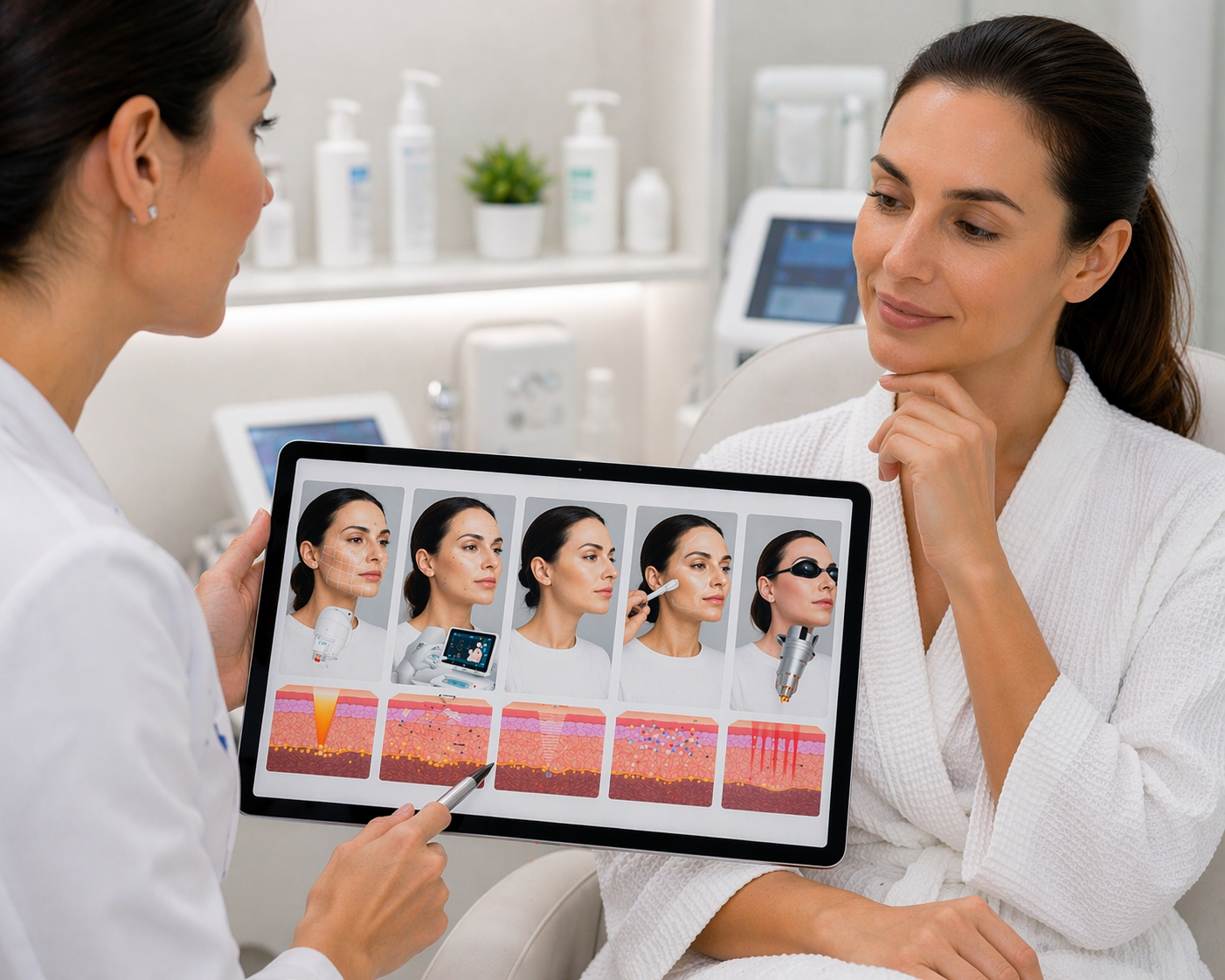
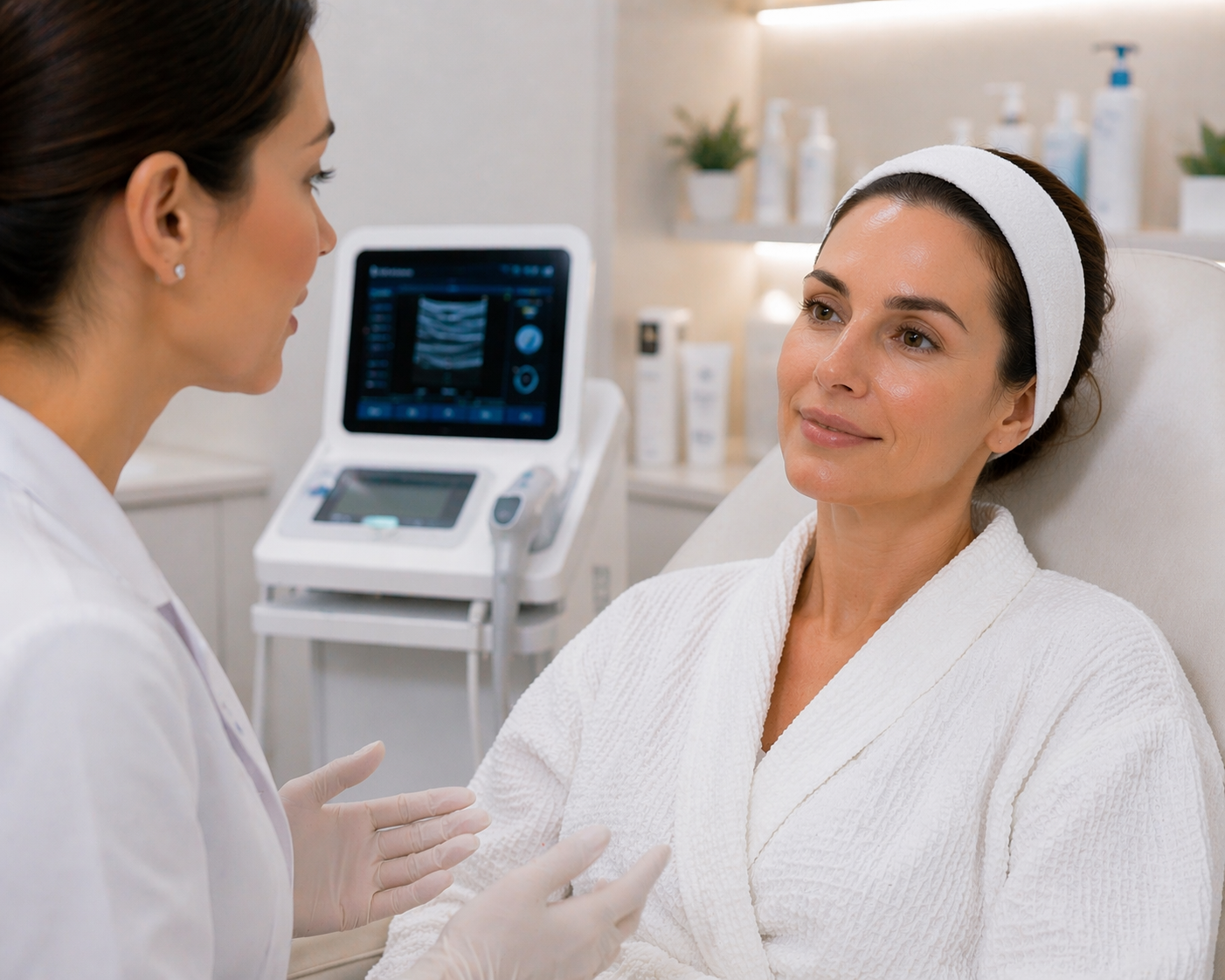
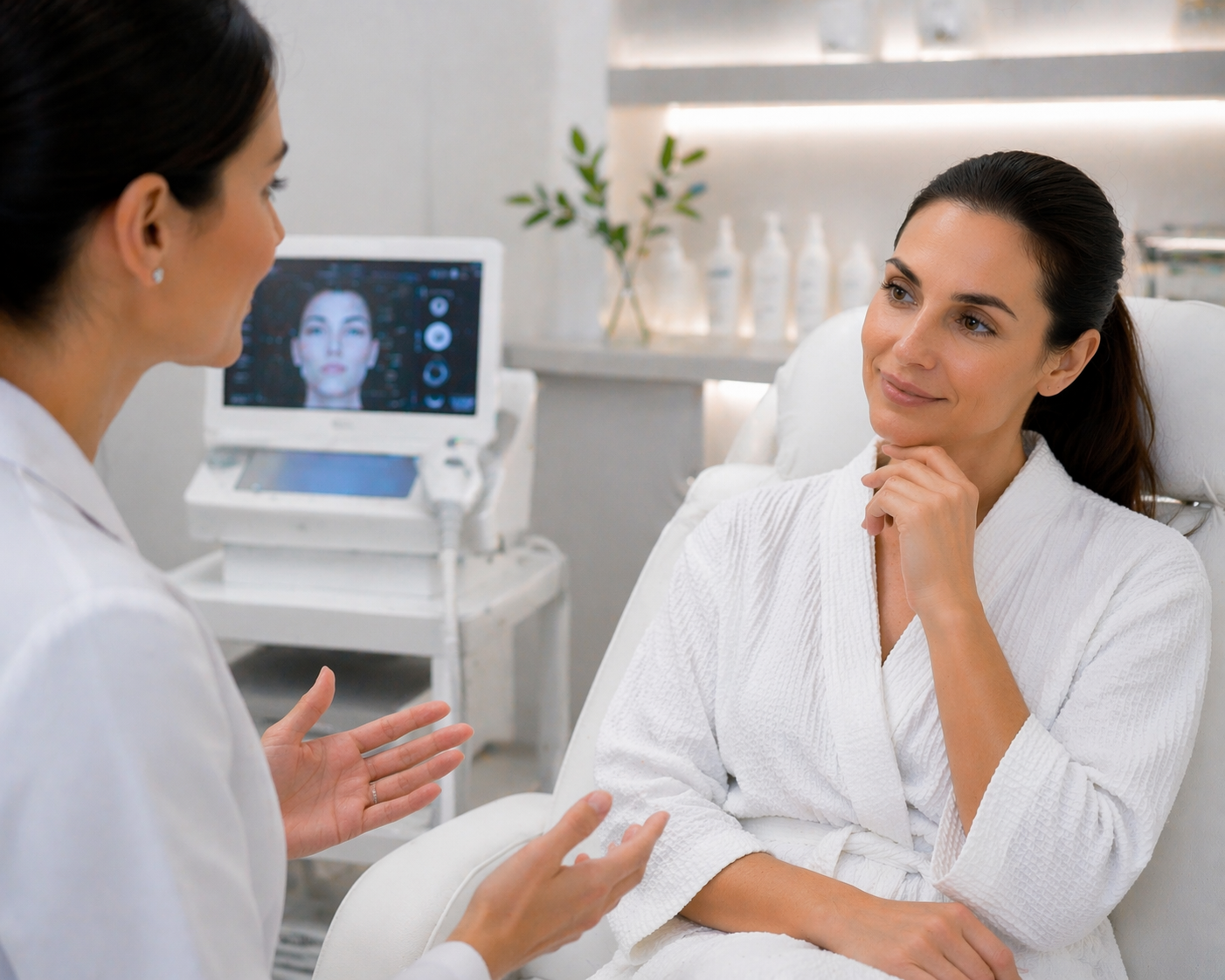
It starts with a consultation. Before any treatment, a practitioner will sit down with you and evaluate your skin. They will ask about the areas that concern you, what you would like to improve and your expectations. This is also your chance to ask questions about anything at all. A good practitioner will explain everything to you in detail and will be honest, so that when you come to make any decisions you are feeling fully comfortable before proceeding.
When the consultation is complete, the area you are going to treat is cleansed, and then a layer of ultrasound gel is applied. The role of this gel is to ensure the HIFU device can slide seamlessly across the skin and delivers ultrasound energy where it should be.
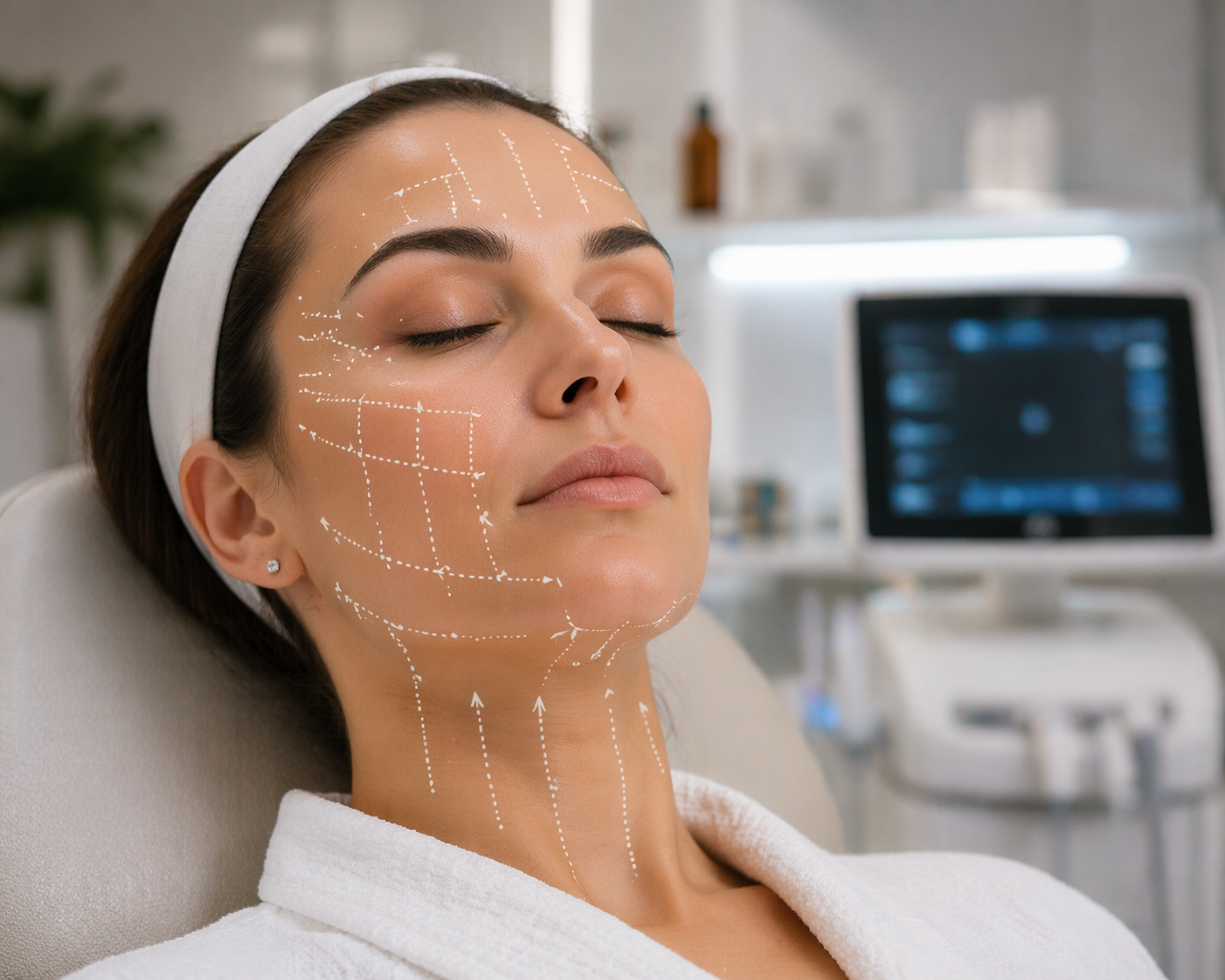
The practitioner then works with the HIFU device, sweeping it over the treatment area in a systematic pattern. You will feel a warmth deep in your skin as the focused ultrasound energy is delivered. Some describe it as a slight prickling or tingling sensation. There can be brief moments of discomfort, especially over bonier areas like the jawline or forehead, but it is entirely tolerable. Most people find the experience much less uncomfortable than they had expected.
The exact duration varies depending on the region being treated. A session focused on a specific area — such as the jawline or beneath the chin — usually lasts about twenty to thirty minutes. A full-face treatment takes around forty-five minutes to an hour. Body treatments depend on the size of the area and can range from thirty to sixty minutes.
And then it is over, just like that. The gel is removed, and you are on your way. There is no bandaging, no special aftercare routine and no recovery period. You may experience some mild redness or a warm sensation in the treated area, but this typically fades within a few hours. Many take their sessions at lunch and return to their afternoon without breaking stride.
The entire process is designed to be as easy and convenient as possible. There is no drama. No surgical theatre. Just a calm, professional session that fits easily into your day.
When Results Become Visible
Perhaps the most common question people ask is how soon they will see results. It is a valid question, and the truthful answer is that HIFU Treatment follows a timeline that is not quite what you may expect.
Some people notice a slight lifting and tightening effect right after their session. This occurs because the focused ultrasound energy causes existing collagen fibres to contract during treatment itself. It is a welcome early sign, but it is not the main event.
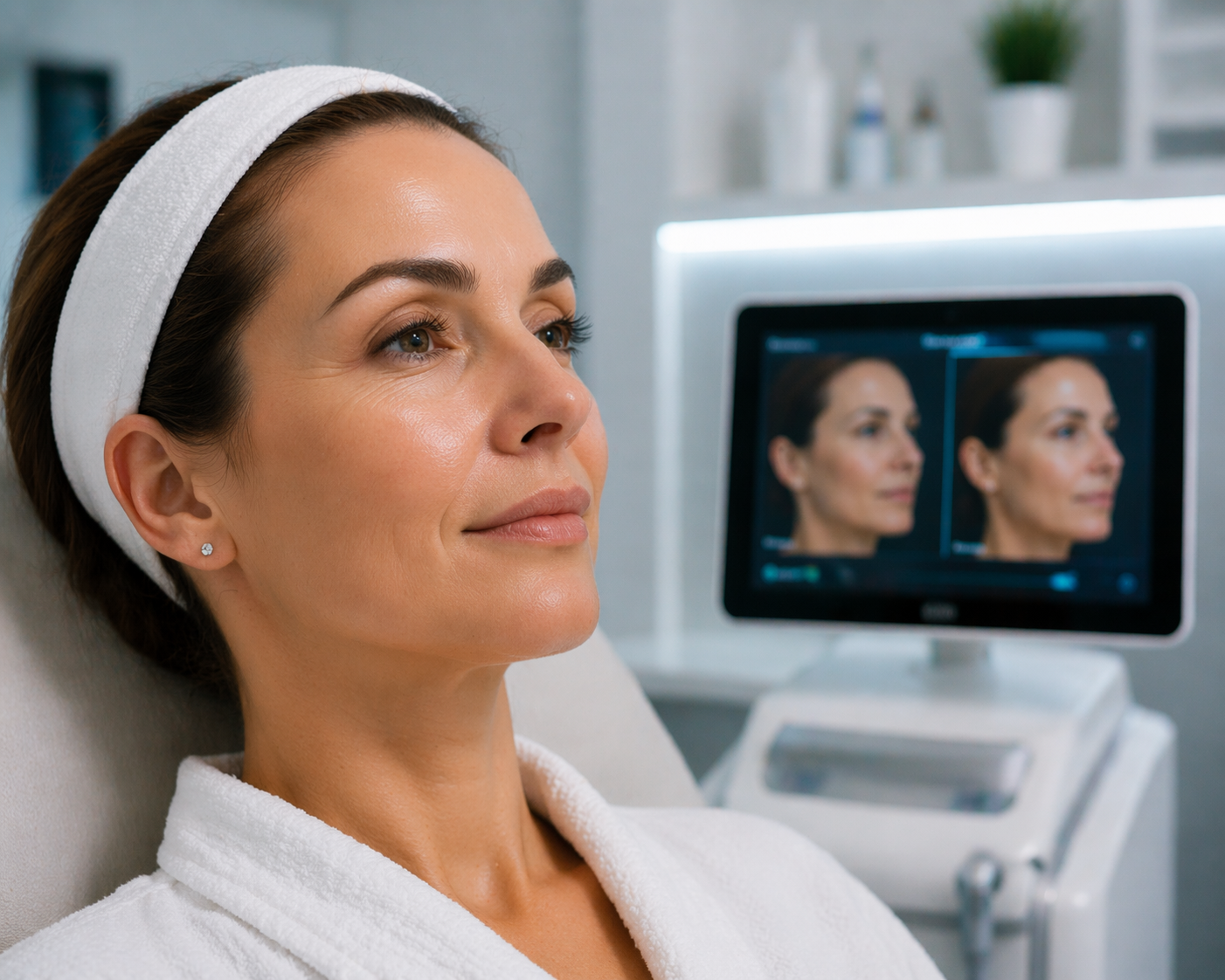
The real change comes in the weeks and months that follow. As your body responds to the treatment by producing new collagen, the skin becomes gradually firmer, tighter and more lifted. Most people begin to experience significant change after two to four weeks. By two to three months, the full results are usually evident — and they can be genuinely impressive.
What people love about this gradual process is that the changes appear utterly natural. There is no sudden, dramatic shift that immediately suggests a cosmetic procedure. Instead, it is a steady, organic improvement. Friends and family may tell you that you look well-rested, healthier or just somehow more refreshed — but most likely they cannot put their finger on exactly what is different. And frankly, that is the best sort of outcome.
As far as how long the results last, most individuals benefit from their HIFU Treatment for anywhere from six to eighteen months. The exact time frame depends on factors such as your age, the condition of your skin prior to treatment, lifestyle habits and the rate at which your body continues to produce and metabolise collagen. Some people like to have one session per year to maintain results, while others prefer a session every eight to twelve months.
It is important to realise that HIFU Treatment does not stop the natural process of ageing. But it does slow it down appreciably and provides your skin with a meaningful boost that you will see and feel for a long while.
Why This Treatment Is Gaining So Much Attention
With the abundance of cosmetic treatments on offer, what is it that makes HIFU Treatment so popular? It is not hard to see why when you look at the full picture.
For starters, it is completely non-surgical. There are no stitches, no needles and no anaesthesia. For many people, that alone is the deciding factor. The notion of going under the knife — even for cosmetic purposes — simply does not appeal. Surgery comes with risks that some would prefer to avoid altogether. HIFU Treatment provides real, visible results without any of those concerns.
Then there is the question of downtime — or, rather, the total absence of it. You can get up and go about your day as normal after a HIFU Treatment session. There is no bruising to disguise, no swelling that prevents you from going outside and no stitches that require removal. You could have a session during your lunch break and no one at the office would know any different. For people with full-time jobs, families and other commitments, this kind of convenience is invaluable.
Another significant benefit is that HIFU Treatment stimulates your body's natural collagen production. Unlike treatments that rely on synthetic materials, HIFU activates your own biology to do the heavy lifting. The collagen your body produces is genuine, natural and yours. That is why the results feel so authentic — they are.
A further advantage worth noting is versatility. HIFU Treatment can be performed across a wide range of areas. It can be applied to the forehead, around the eyes, along the jawline, under the chin, on the neck, across your chest and on various parts of the body including the arms, stomach, thighs and hands. Whether you have one particular concern or numerous areas to address, HIFU Treatment can be customised to meet your needs.
It is also appropriate for all skin types, which is not always true of cosmetic procedures. Some laser-based treatments, for instance, pose risks for certain skin tones. This is not the case with HIFU Treatment, as it completely bypasses the outer layer of your skin and works on the deeper layers exclusively.
For those who have already had cosmetic surgery, HIFU Treatment is useful for prolonging and enhancing the results. Surgery is not permanent — after a facelift, the skin continues to age. Regular sessions of HIFU can extend the outcome of surgery, prolonging the period before further work would be required.
And since HIFU Treatment targets deeper layers of the skin, it is less likely to be affected by sun exposure or environmental factors than some surface-level treatments. The collagen that is produced sits far beneath the surface, where it remains protected from external stressors.
Combine all these benefits — non-invasive, no downtime, natural collagen stimulation, versatility across face and body, suitability for all skin types and long-lasting results — and you can understand why HIFU Treatment is considered one of the smartest choices in non-surgical aesthetics.
How HIFU Treatment Compares to Other Options
Choosing the right approach to any aesthetic concern is a personal decision, but it can be helpful to understand how the alternatives compare. Each treatment has its own strengths and limitations. Here is a candid look at how HIFU Treatment measures up against some other popular methods of skin tightening and rejuvenation.
Compared to a Surgical Facelift
The most comprehensive approach to facial rejuvenation is undoubtedly a surgical facelift. When performed by a skilled surgeon, significant lifting and tightening results may be achieved that can last five to ten years. But it comes with major trade-offs. Surgery is done under general anaesthesia, carries the risk of complications such as infection and scarring, and requires a recovery time that can extend for weeks. HIFU Treatment provides a non-invasive alternative. The results are more subtle compared to surgery and typically last six to eighteen months, but with virtually none of the risks, no anaesthesia and zero downtime. For those who wish to see meaningful improvement without invasive surgery, HIFU Treatment provides a compelling middle ground.
Compared to Ultherapy
Ultherapy is built on similar ultrasound technology. One of its distinguishing features is an ability to perform real-time imaging, so that the practitioner can visualise tissue layers while treating them. This can provide additional precision. However, Ultherapy sessions are usually considerably more costly. HIFU Treatment provides similar tightening and lifting effects at a more accessible price point, making it attainable for a wider range of individuals while remaining effective.
Compared to Chemical Peels
Chemical peels act on the outer surface of the skin. They are well suited for texture, pigmentation, fine surface lines and for giving the skin a brighter, fresher appearance. But they do not address deeper structural concerns like sagging or deep creases. HIFU Treatment targets beneath the top layers at the SMAS and dermal levels, addressing the underlying cause of skin laxity. These two types of treatment actually work beautifully together — a chemical peel for the outer surface and HIFU Treatment for the deeper structure can produce extraordinary results when combined.
Compared to Laser Treatments
Laser treatments are effective agents for resurfacing skin, reducing scars, correcting pigmentation and creating superficial collagen stimulation. They do what they do well, but their action is mostly limited to the upper layers of the skin. HIFU Treatment penetrates much deeper, targeting the structural tissue that lasers cannot physically access. Many laser treatments also require a series of visits and may include recovery time involving redness and peeling. HIFU typically requires only one session and involves no recovery time at all.
| Treatment |
Depth of Action |
Downtime |
Key Strength |
| HIFU Treatment |
Deep (SMAS and dermis) |
None |
Non-surgical lifting and collagen stimulation |
| Surgical Facelift |
All layers (surgical) |
Two to six weeks |
Most dramatic and long-lasting results |
| Ultherapy |
Deep (with imaging) |
None to minimal |
Real-time visualisation for precision |
| Chemical Peels |
Surface only |
A few days |
Texture, brightness and pigmentation |
| Laser Treatments |
Surface to mid layers |
Varies (days to weeks) |
Resurfacing, scars and pigmentation |
There is no single best treatment. The right choice depends on your specific goals, your budget, how much downtime you can manage and whether you are comfortable with different types of procedures. HIFU Treatment is one powerful tool in the toolbox, and for a large number of people it strikes the right balance between effectiveness and convenience.
Who Benefits Most from This Treatment
One of the great things about HIFU Treatment is how broad its reach is. It is not a one-size-fits-all procedure, and the best candidates are more varied than you might imagine.
If you are in your twenties or thirties and starting to see the first signs of ageing — maybe some slight softening around the jawline or fine lines beginning to form around your eyes — HIFU Treatment can serve as a preventative measure. By kick-starting collagen production now, you are essentially giving your skin a head start and slowing down the visible signs of ageing before they become obvious. Think of it as maintenance rather than repair.
HIFU Treatment usually delivers its most significant corrective results for those in their forties. This is the age when sagging, wrinkles and loss of elasticity become more apparent. The skin still has a fair amount of collagen to build upon, and HIFU Treatment can dramatically increase natural collagen production for a lifted appearance that takes years off how you look and feel.
HIFU Treatment is also effective for individuals over the age of sixty, although realistic expectations are important. At this stage, the skin has lost a great deal of collagen and elastin, and HIFU Treatment cannot achieve the same results as surgery. What it can do is offer a meaningful improvement — tighter skin, less sagging and an overall fresher, more rested appearance. For many people in this group, that kind of improvement is exactly what they are looking for.
And this is not only a treatment for women. Men are increasingly seeking out HIFU Treatment for concerns such as a softening jawline, a double chin or loosening skin around the neck. The procedure works the same regardless of gender, and there is no reason anyone should feel it is not for them.
Another group that benefits greatly from HIFU Treatment includes individuals who have undergone cosmetic surgery in the past. The results of surgery do not last forever, and the effects of a facelift gradually diminish as the skin continues to age. HIFU Treatment can help prolong those surgical results by stimulating new collagen production, potentially delaying the need for further surgery.
If you want to visibly tighten and lift your skin without surgical intervention — or if you simply prefer to avoid everything that surgery involves, including its cost, risks and downtime — then HIFU Treatment is worth considering. It is designed for those who want to look better and feel better, in a safe and natural way that is completely non-invasive.
Safety and What You Should Know
Safety is one of the first questions people raise, and quite rightly so. When you are considering any type of cosmetic procedure, knowing the risks is just as important as knowing the benefits.
Fortunately, HIFU Treatment has a robust and well-documented safety record. Focused ultrasound technology has been used in the medical world for several decades. It was first applied in clinical settings — for example, to treat certain types of tumours — years before any cosmetic application emerged. That long history of use gives it a foundation of research and clinical evidence that many newer cosmetic technologies simply do not have.
The procedure itself is designed to be inherently safe. The ultrasound energy penetrates the surface of the skin without harming it. All thermal activity occurs at a specific depth below the surface and is focused on the areas where collagen is generated. Surrounding tissues are left untouched.
That said, no procedure is entirely without side effects, and it is important to be straightforward about what you might experience. The side effects of HIFU Treatment are generally mild and temporary. These may include minor redness in the treated area, a warm or tingling sensation, slight swelling and sometimes some tenderness. The vast majority of these clear up within a couple of hours. Occasionally, you may experience mild bruising or numbness, which generally resolves within a day or two.
When performed correctly by a trained and qualified practitioner, serious side effects are exceedingly rare. This is a crucial point — the expertise and experience of your practitioner makes a considerable difference. Always ensure your practitioner is qualified, using reputable equipment and taking time to assess your skin and discuss your goals before proceeding with treatment.
Regulatory clearances for HIFU Treatment have been granted in several countries, and clinical research continues. While no cosmetic procedure can be entirely risk-free, HIFU Treatment sits on the safer end of the spectrum — particularly when compared to surgical alternatives.
Caring for Your Skin Is Caring for Yourself
If you have read this far, you should now have a truly comprehensive understanding of what HIFU Treatment is, how it works and what it offers. That matters. It is always a good idea to learn before making any decision about your body.
Taking care of your skin is not vanity. It is about feeling comfortable in your own body. It is about looking in the mirror and seeing someone who actually reflects how you feel inside. And everyone deserves that, no matter their age, their gender or where they are in life.
HIFU Treatment is one option among many. But it is a good one — safe, effective, non-invasive and rooted in decades of medical science. It works with your body's own biology to deliver results that are natural, gradual and lasting. And it achieves all of this without surgery, without needles and without taking a single day from your life for recovery.
The most important thing is that you are informed — whether you are actively considering HIFU Treatment right now or thinking about it for some point in the future. You know the facts. You understand the process. And when you decide — if you feel it is right for you — it will be from a position of knowledge and confidence.
Whatever you choose, the simple fact that you took time to learn and understand your options is something to feel good about.